Seat Belt Injuries: Chest, Shoulder and Abdominal Pain After a Crash
In This Guide
- How a seat belt protects you and why it can still leave you sore
- The signs of a “seat belt sign” and why doctors take it seriously
- Chest, shoulder, abdominal and hip injuries from the belt
- Red flags that need emergency care
- How chiropractic care helps once serious injuries are ruled out
Start Here: The Short Version
Seat belts save lives. They also concentrate crash forces across your collarbone, chest and hips, so bruising and soreness along the belt line are common after a collision. Most belt injuries are bruises and muscle strains, but a bruise across the belly can signal internal injury. Abdominal pain, trouble breathing or chest pain after a crash needs emergency care right away.
Why Seat Belts Can Cause Injuries
In a collision your body keeps moving forward until something stops it. A seat belt spreads that stopping force across the strongest parts of your body: the pelvis, the rib cage and the collarbone. That is exactly what it is designed to do, and it is why wearing one dramatically lowers your risk of serious injury. The trade-off is that the belt presses hard against those areas for a split second, which can bruise skin and muscle and strain the joints underneath.
Key Distinction: Being sore from your seat belt is not a reason to stop wearing it. Unbelted occupants face much higher risks of severe injury and ejection.
Common Seat Belt Injuries
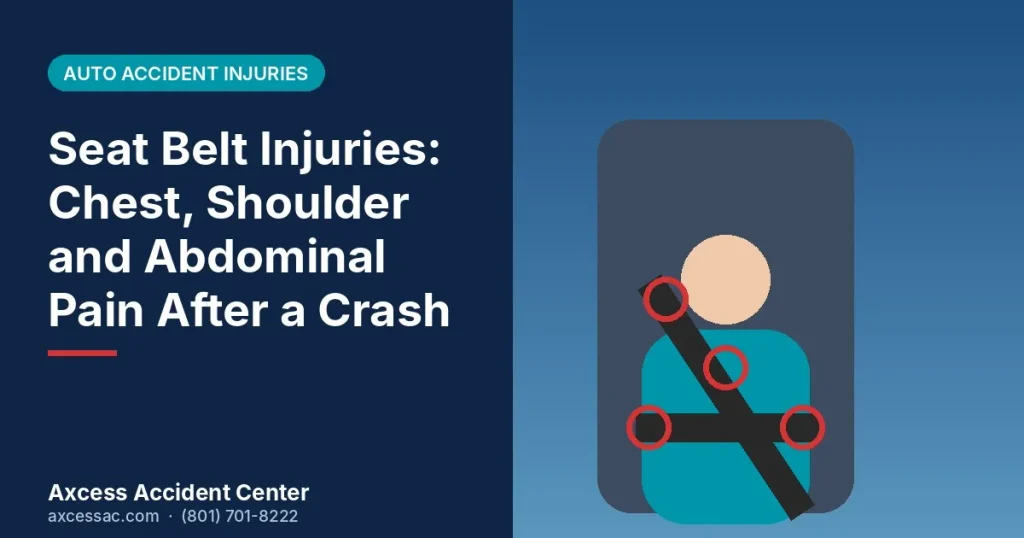
1. Chest Wall Bruising and Rib Pain
The shoulder strap crosses your sternum and ribs. Bruising, tenderness and pain with deep breaths or coughing are common. Rib fractures are possible in higher-speed crashes, so sharp pain with breathing should be checked by a medical provider.
2. Collarbone and Shoulder Pain
The strap rests over the collarbone and the front of the shoulder. The sudden pressure can bruise the area and strain the muscles that connect the neck and shoulder. Many people notice pain when lifting the arm or turning the head. Learn more about shoulder pain after a crash.
3. Abdominal Bruising (the “Seat Belt Sign”)
A bruise or red mark across the lower belly from the lap belt is called a seat belt sign. Emergency physicians take it seriously because it can be linked to injuries of the intestines, other abdominal organs or the lower spine. If you see this mark, get evaluated at the ER even if you feel okay.
4. Hip and Pelvic Pain
The lap belt holds your pelvis in place. Bruising over the hip bones and soreness when walking, sitting or climbing stairs are common. See our guide to hip pain.
5. Neck and Upper Back Strain
While the belt holds your torso, your head keeps moving. That is why seat belt soreness and whiplash often happen together. Neck stiffness, headaches and pain between the shoulder blades can follow.
Pro-Tip: Take a photo of any belt-line bruise each day for a week. Bruises change color and fade quickly, and photos help your provider and your claim.
Red Flags: Go to the ER If You Have
- A bruise or mark across your abdomen from the lap belt
- Abdominal pain, swelling or tenderness
- Chest pain, shortness of breath or pain that is sharp with every breath
- Nausea, vomiting or blood in urine
- Back pain with numbness, tingling or weakness in the legs
- Dizziness or fainting
How Chiropractic Care Helps
Once serious injuries are ruled out, many people still deal with sore chest muscles, a stiff neck, upper back pain and hip discomfort. A treatment plan at Axcess Accident Center may include:
- A thorough exam to map out which joints and muscles were affected.
- Gentle chiropractic adjustments to restore normal motion in the spine and rib joints.
- Massage therapy to ease muscle tension around the shoulders, chest and back.
- Rehabilitation exercises to rebuild strength and posture as you heal.
Simple Ways to Wear Your Belt Correctly
- Lap belt low and snug across your hips, not your stomach
- Shoulder strap across the middle of your chest and collarbone, away from your neck
- Never put the shoulder strap behind your back or under your arm
- Adjust the seat so you sit upright, not reclined
Frequently Asked Questions
Is it normal to be sore from a seat belt after a crash?
Yes. Bruising and soreness along the belt line are common. However, abdominal pain, a bruise across the belly, chest pain or trouble breathing need emergency evaluation.
How long does seat belt bruising last?
Minor bruises usually fade over one to two weeks. Pain that gets worse, spreads or lasts longer should be checked.
Can a chiropractor treat seat belt injuries?
Yes, once serious injuries are ruled out. Chiropractic care, massage and rehab can help with the muscle and joint pain in the neck, shoulders, ribs and hips.
Does PIP cover treatment for seat belt injuries in Utah?
Utah PIP can help pay for reasonable and necessary medical care related to the crash, regardless of fault. Coverage depends on your policy.
Sore From a Recent Crash?
Our auto injury team in Provo, Spanish Fork, American Fork and West Valley City can evaluate your injuries and build a recovery plan. We also help with PIP billing.