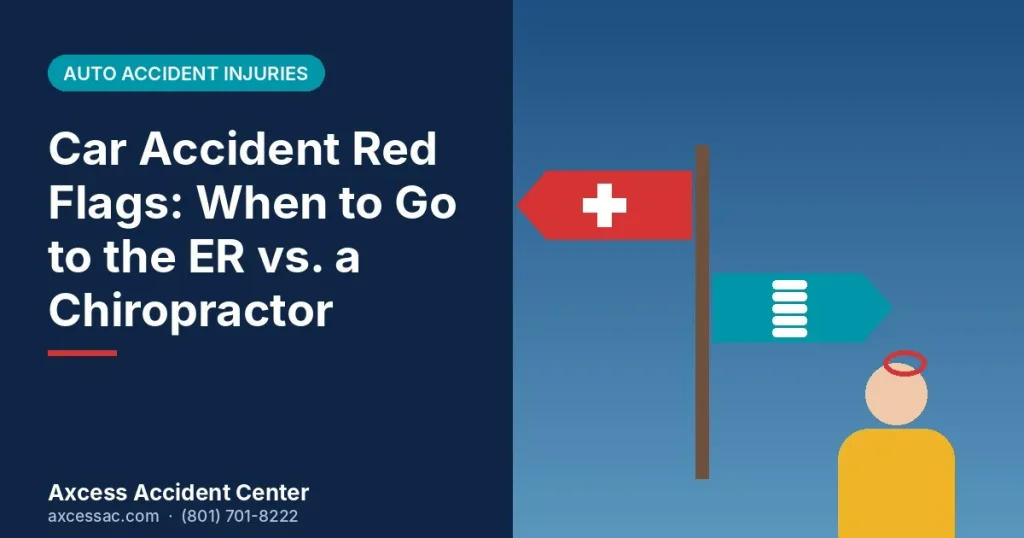
Car Accident Red Flags: When to Go to the ER vs. a Chiropractor
In This Guide
- The symptoms that mean “go to the ER now”
- Injuries that are usually a good fit for chiropractic care
- Why many crash injuries show up hours or days later
- A simple decision checklist you can save on your phone
- How the ER, your doctor and your chiropractor work together
Start Here: The Short Version
If anyone has a head injury with confusion, trouble breathing, chest or abdominal pain, numbness or weakness, severe neck pain, or a possible broken bone, call 911 or go to the emergency room. Those are emergencies. If serious injuries have been ruled out but you have stiffness, soreness, headaches or back pain in the days after a crash, a chiropractor who focuses on auto injuries is a good next step.
Why This Decision Is Confusing
Adrenaline after a crash can mask pain. Many people feel shaken but “fine” at the scene, then wake up the next morning with a stiff neck, a headache or back pain. Others feel sore right away and are not sure whether it is serious enough for the ER. Knowing the difference between an emergency and a soft-tissue injury helps you get the right care first.
Go to the ER (or Call 911) If You Notice:
- Loss of consciousness, even briefly
- Confusion, slurred speech, vision changes or repeated vomiting
- A severe or worsening headache
- Numbness, tingling or weakness in the arms or legs
- Severe neck pain or pain directly on the spine
- Chest pain or trouble breathing
- Abdominal pain, swelling or bruising across the belly (a possible seat belt injury)
- An obvious deformity, a bone that may be broken, or a deep cut
- Pregnancy, with any pain, bleeding or reduced movement of the baby
Key Distinction: The ER’s job is to find and treat life-threatening injuries. A clear ER visit does not mean you are not hurt. It means you do not have an emergency. Soft-tissue injuries often need follow-up care.
When a Chiropractor Is a Good Next Step
Once emergencies are ruled out, an auto injury chiropractor can evaluate and treat the muscles, ligaments and joints that take the brunt of most crashes. Common reasons people come see us:
1. Neck Pain and Stiffness
Whiplash is one of the most common crash injuries. It often causes neck pain, reduced range of motion and stiffness that can build over the first few days. Learn about neck pain treatment.
2. Headaches That Started After the Crash
Tension in the neck and upper back can trigger headaches. A new headache after a head impact should be checked by a medical provider first. Once a concussion has been ruled out or is being managed, chiropractic care can address the neck side of the problem.
3. Mid and Lower Back Pain
Seat belts and sudden stops place heavy loads on the spine. Back pain, muscle spasms and pain when sitting are common. See back pain after an accident.
4. Shoulder, Hip and Knee Pain
Bracing against the wheel or dashboard can strain the shoulders, hips and knees. These injuries often respond well to a combination of chiropractic care, massage and rehab exercises.
Pro-Tip: Bring your ER discharge papers or imaging reports to your first chiropractic visit. They help your provider build on what has already been checked.
Your Decision Checklist
- Any red-flag symptom from the list above? Go to the ER or call 911.
- No red flags, but pain, stiffness or headaches? Schedule an exam with an auto injury chiropractor within a few days.
- Feel fine right now? Watch for delayed symptoms over the next 72 hours and get checked if anything changes.
- Notify your auto insurer about the crash, even if you feel fine.
- Keep a written record of every symptom, appointment and missed day of work.
How the ER, Your Doctor and Your Chiropractor Work Together
The best recovery plans use the right provider for each job. The ER handles emergencies and imaging. Your primary care doctor manages medications and overall health. A chiropractor focuses on restoring movement and reducing pain in the spine and soft tissues. At Axcess Accident Center, we can refer you for imaging or to medical specialists when your injuries need it, and we coordinate with your other providers.
Frequently Asked Questions
Should I go to the ER even if I feel okay after a car accident?
If you have any red-flag symptoms, yes. If you truly feel fine, you do not need the ER, but watch for delayed symptoms like neck stiffness or headaches over the next few days and get evaluated if they appear.
Can I see a chiropractor instead of a medical doctor after a crash?
For emergencies, no. Always rule out serious injuries first. For soft-tissue injuries like whiplash and back strain, a chiropractor is often an appropriate first provider, and we will refer you out if we find anything outside our scope.
Does Utah PIP cover chiropractic care after an accident?
Utah PIP generally covers reasonable and necessary medical care related to the crash, which can include chiropractic care. Coverage depends on your policy. Our team can help you check your benefits.
How long should I wait before seeing a chiropractor?
There is no benefit to waiting. Once emergencies are ruled out, getting evaluated within the first few days helps catch injuries early.
Get Checked by an Auto Injury Team
Axcess Accident Center focuses on auto accident care in Provo, Spanish Fork, American Fork and West Valley City. We help with PIP billing and offer chiropractic, massage and rehab in one place.